


By: Rocheford T. Gardiner | Contributing Writer
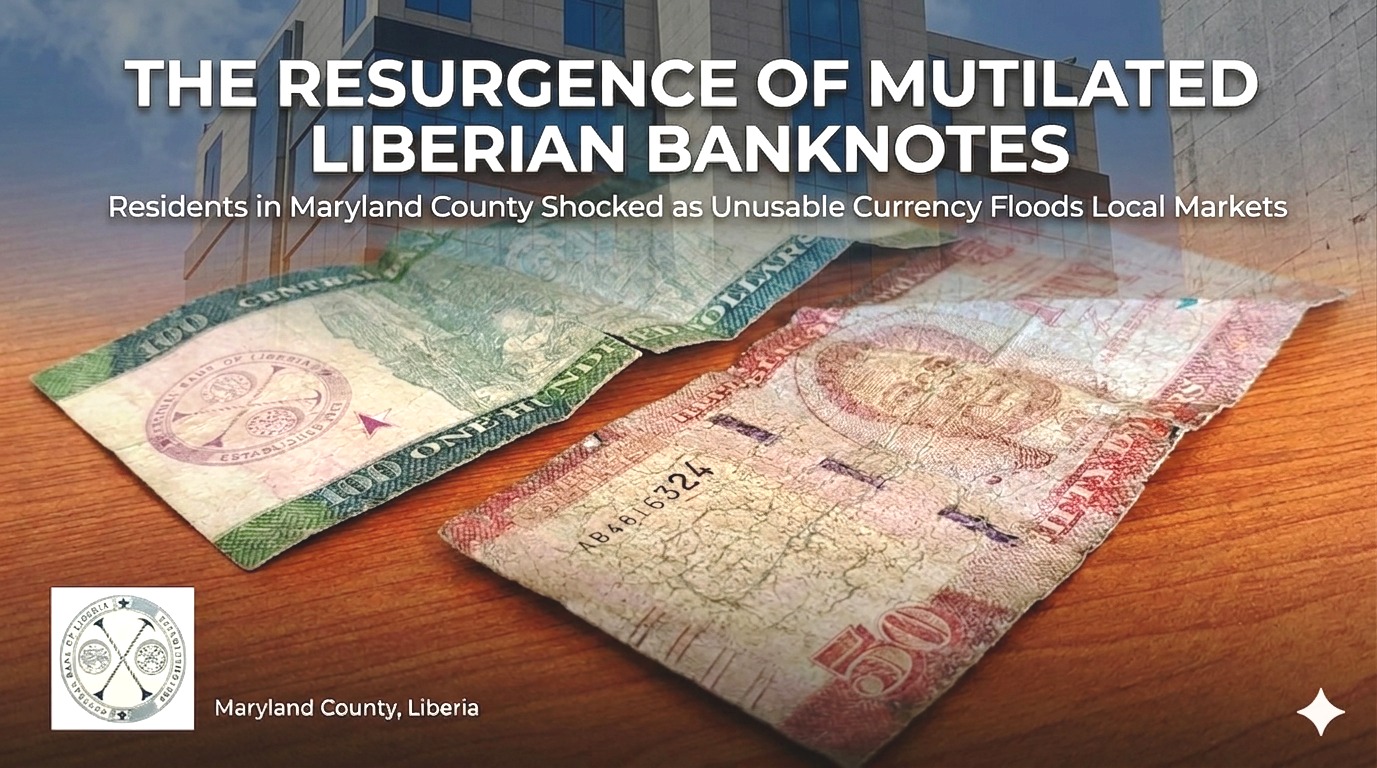
Harper City, Maryland County |April 02,2026| Residents of Maryland County are expressing deep shock and growing frustration as “mutilated” Liberian banknotes—currency so worn, torn, or defaced it is typically deemed unfit for use—have flooded back into local markets.
The resurgence of these “mutes” comes as a baffling development for a population that expected a more stable currency landscape following the previous George Weah administration’s move to overhaul the nation’s monetary system. Despite the controversial printing of new series, denominations, and coins intended to replace the tattered legacy notes, the old, damaged currency has returned with a vengeance.
Banks Passing the Burden
In a troubling twist, the crisis is not limited to street-level transactions. Local reports indicate that even commercial banks in the region are reportedly paying out customers with mutilated notes. When citizens attempt to withdraw their hard-earned savings, they are often met with currency that is barely held together by tape or grit.
The impact on the ground is immediate and painful:
- Market Refusals: Traders and small business owners are increasingly refusing to accept mutilated notes as legal tender.
- Economic Stagnation: For a population already grappling with economic hardship, the inability to spend the cash they hold is creating a “liquidity trap” for the poor.
- Lack of Redress: Because the Central Bank of Liberia (CBL) lacks a consistent administrative presence in this southeastern region, ordinary citizens have no official channel to exchange the bad notes or lodge formal complaints.
The Coin Crisis and “Unintentional Hoarding”
Adding to the currency chaos is a mysterious shortage of the newer Liberian coins. Investigations suggest an “unintentional hoarding” phenomenon driven by the gambling industry.
Solar-powered slot machines, reportedly deployed across the country by a Chinese-operated firm, have become “coin sinks.” As rural residents use the coins to play these machines, the physical currency remains trapped within the devices, effectively removing small denominations from the daily flow of the local economy.
Allegations of an Internal Syndicate
While the presence of the notes is a visible problem, the source of the resurgence is the subject of darker rumors. Allegations are mounting that a dubious syndicate within the Central Bank of Liberia may be responsible.
“The fear is that mutes collected from circulation and officially marked for destruction are being repackaged,” says one local observer who requested anonymity. “Instead of being discarded, they are being re-injected into the system for personal gain.”
CBL sources have meanwhile dismissed the allegations as baseless and misleading.
Action from the CBL
Sources at the CBL say the issue of mutilated notes is difficult to handle as many end-users do not take proper care of the notes. “That’s why we have continued with our awareness campaigns around the country.”
The CBL is also encouraging the use of digital transactions, especially “mobile money.” However, that process has some serious shortcomings as network instability, quality and efficiency of mobile service providers remains another serious challenge, as frequent “downtimes” and poor coverage in the county has still not been resolved.
For now, the people of Maryland County remain in a state of financial limbo, caught between a banking system that hands them unusable paper and a marketplace that refuses to take it.

