


By: Ernest Kpehe Moibah, Jr | Bomi Correspondent
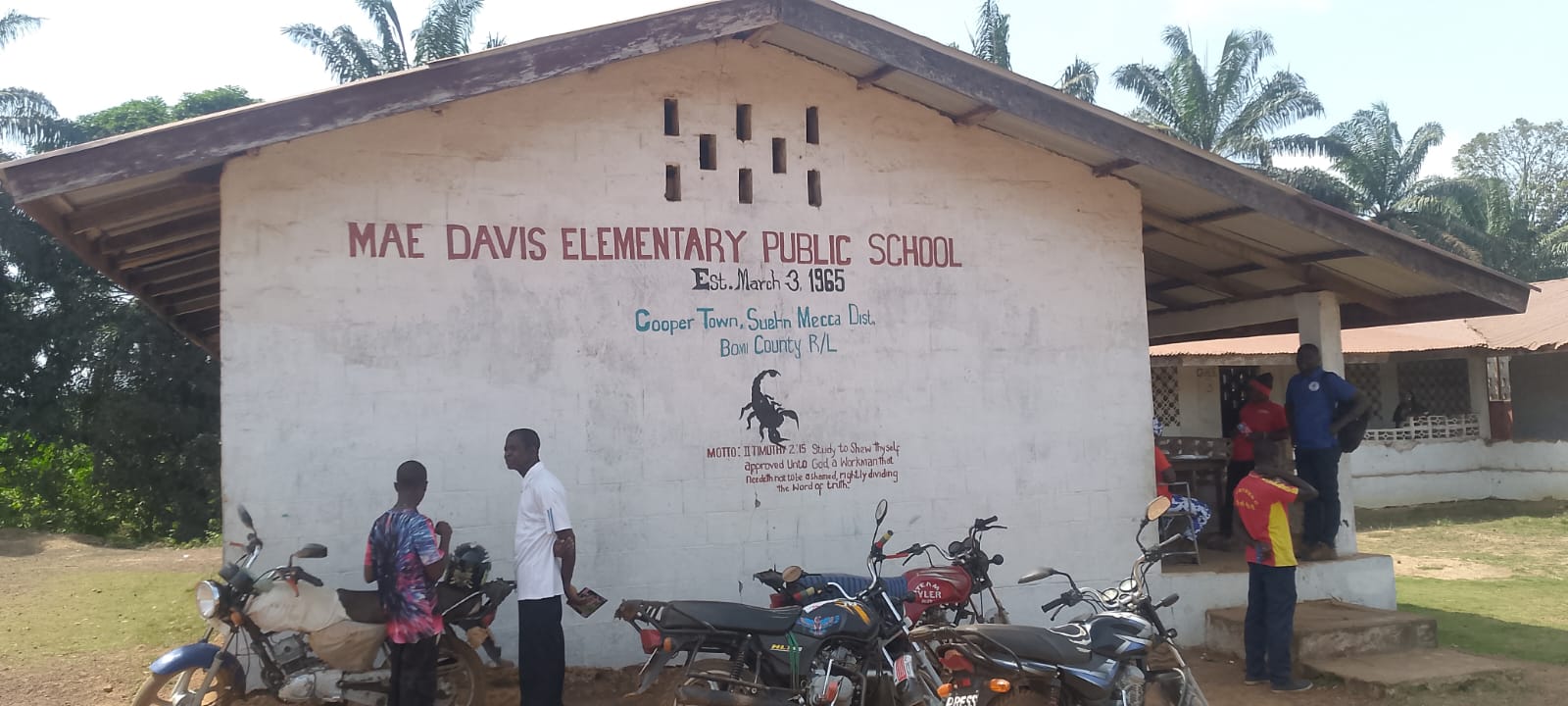
Suehn Mecca District, Bomi County |April 5, 2026|A growing education crisis is unfolding in Suehn Mecca District, where Mae Davis Public Elementary School is battling severe infrastructure challenges that are threatening the future of its students.
With an enrollment of 176 pupils for the current academic year, the school is facing a critical shortage of seating and a dangerously dilapidated building, leaving students to learn under extremely difficult conditions.
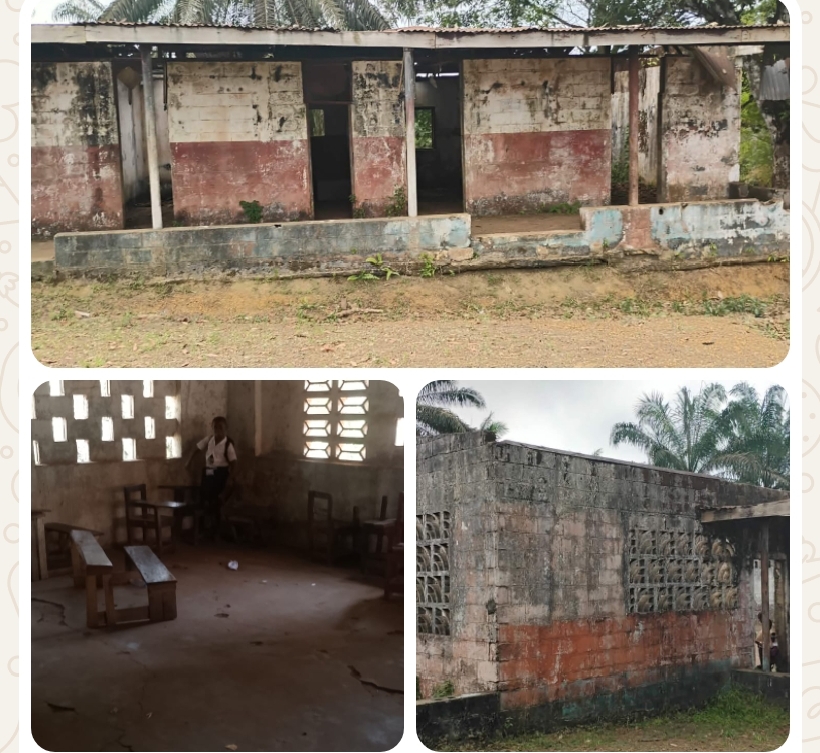
Inside the classrooms, the situation is alarming. Two students are forced to squeeze onto a single chair, while many others sit on the bare floor or stand for hours just to follow lessons. The overcrowded and uncomfortable environment is not only disrupting teaching and learning but also raising serious concerns about the well-being and academic performance of the children.
“This is not the kind of environment any child should learn in,” said Vice Principal Seh Konah, who described the situation as long-standing and worsening.
According to him, despite repeated concerns raised over time, little to no intervention has been made, leaving both teachers and students to cope with the harsh reality daily.
The urgency of the situation is further heightened as the rainy season approaches; a period that could expose the already weakened structure to even greater risk. Cracks, leaks, and poor roofing threaten to turn classrooms into unsafe zones, potentially forcing disruptions or even closure if conditions deteriorate.
Education stakeholders in Bomi County are said to be aware of the situation, but community members argue that awareness alone is no longer enough.
“This is beyond discussion; it requires immediate action,” one community leader stressed, calling for swift intervention from both local authorities and national government.
Among the urgent needs identified are additional desks and chairs, rehabilitation of the school building, and temporary classroom arrangements to ensure that learning continues in a safe and dignified environment.
Parents, teachers, and residents are now sounding a unified call: save the future of these 176 children before it is too late.
As pressure mounts, hope remains that authorities and partners will respond quickly to prevent the situation from escalating into a full-blown educational emergency in one of Bomi County’s rural communities.

