


By Paul M. Kanneh
The Liberia Agriculture Commodities Regulatory Authority (LACRA) has begun stakeholders’ engagement aimed at discouraging the smuggling of cocoa and other agriculture products outside of Liberia via Guinea and Sierra Leone borders.
The move comes following a combined media tour and subsequent radio discussion on Forest Hour Radio Show on low pricing and smuggling by Harligee Community Radio and Liberia Forest Media Watch (LFMW) on March 5, 2026.
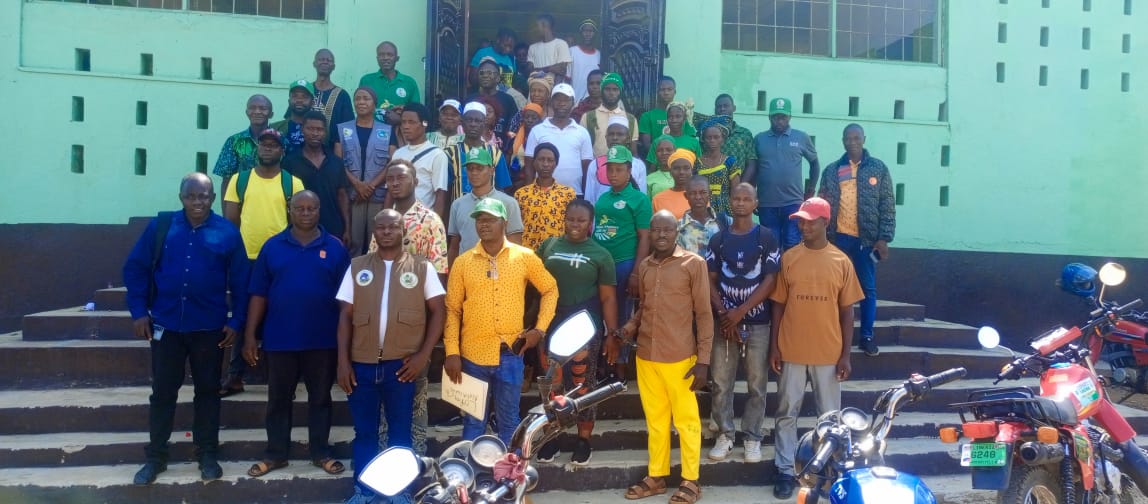
The stakeholders’ consultation, which began March 20, 2026 targets farmers and cooperative groups from Kolahun, Wanhassa, and Lukahemba Districts in Lofa County with a focus on strengthening agricultural production and commodity regulation for the benefit of the country.
The meeting brought together cocoa, coffee, and oil palm farmers engaged in cooperative initiatives to improve their livelihoods and increase productivity.
LACRA’s Deputy Director General for Operations and Technical Services, Godia Alpha Kortu Gongolee, declared plans to enforce new regulations that will prohibit the sale of cocoa, coffee, and oil palm to neighboring countries, including Sierra Leone and Guinea.
Mr. Gongolee warned that violators will be arrested and their goods confiscated without compensation, noting, LACRA will deploy monitors across farming communities to supervise buyers and ensure compliance.
He urged farmers to sell their produce within Liberia through formal channels so that the country and its farmers can fully benefit from exports. “We want farmers to market their produce here in Liberia before export so that the value remains within the country. “We are also working with local authorities and will continue to provide training and technical support”, Deputy Director Godia Alpha Kortu Gongolee said.
He emphasized that LACRA will work primarily with cooperatives rather than individual farmers, noting that organized groups are in better position to receive and manage government support and benefits.
The LACRA’s Technical Director explained that delays in exporting commodities are partly due to new European Union regulations on deforestation. According to him, under the new EU regulation, farms will need to be mapped, capturing size and location to ensure compliance with international standards under the European Union Deforestation Regulation (EUDR) which encourages farmers to preserve forest cover and maintain shade trees.
Speaking on behalf of the farmers, Duwana Amadu Nyah of the Sembahill Farmers’ Cooperative welcomed LACRA’s engagement but raised serious concerns about low prices of cocoa in Liberia.
Duwana noted that farmers are forced to sell to buyers from Sierra Leone and Guinea due to better prices and immediate cash availability, especially during harvest periods.
“In Sierra Leone, a kilo of cocoa is sold for about LRD $1,000, but in Liberia it drops to around LRD 250. This situation is hurting farmers and pushing us to sell across the border”, he explained
He added that cocoa farming is the primary source of livelihood for many farmers, making fair pricing essential for their survival. He called on the government to provide greater support and improve the local buying system.
Responding, LACRA Board Chairperson, Josephine Francis said prices are influenced by the global market, adding, LACRA has established a pricing system, but some agents are still offering lower prices at the farm level.
She disclosed that LACRA’s official buying price is approximately US$3.48, but agents sometimes reduce this amount when purchasing directly from farmers. She encouraged farmers to join cooperatives, which offer better prices and reduce exploitation by middlemen.
“Through cooperatives, LACRA buyers can engage directly at designated centers, ensuring fair pricing,” she said, citing Ghana and Côte d’Ivoire as examples.
Kolahun District Commissioner, Joseph K. Yarkoi, called on the government to provide financial and material support to farmers. He recommended a fair pricing system to discourage farmers from selling their produce to foreign buyers.
At the close of the meeting, LACRA distributed farming tools, including cutlasses and sharpening files, to several cooperatives such as the Sembahill Farmers’ Cooperative and the After the Rain Multipurpose Cooperative.

