


By: Jenneh S Kemokai | Grand Cape Mount Correspondent
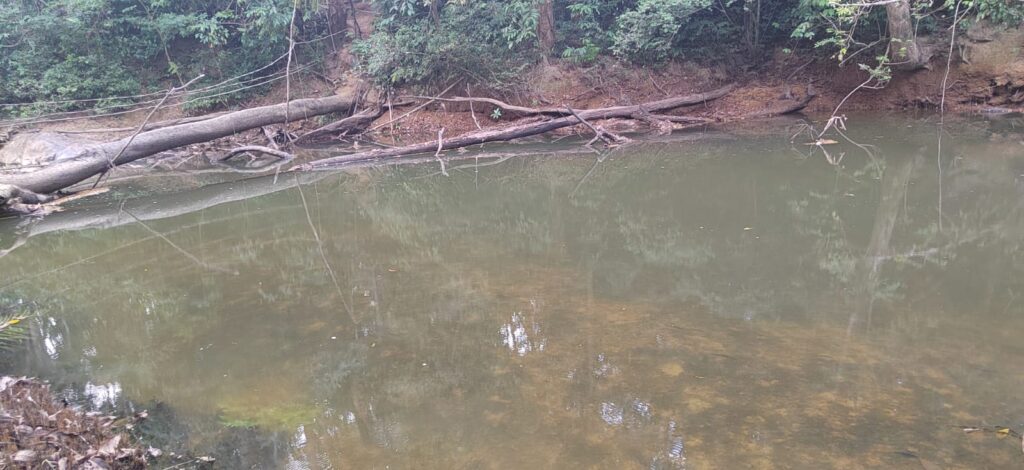
Koima Weyaja Town, Tawer District |March 1, 2026 | Residents across more than six communities along the Mavor Creek in Grand Cape Mount County are confronting a severe drinking water crisis. They alleged that Bea Mountain Mining Company has polluted their water source again.
The situation echoed prior incidents in 2016 and 2022 when residents of Jinkoder faced similar contamination and relocation fears.
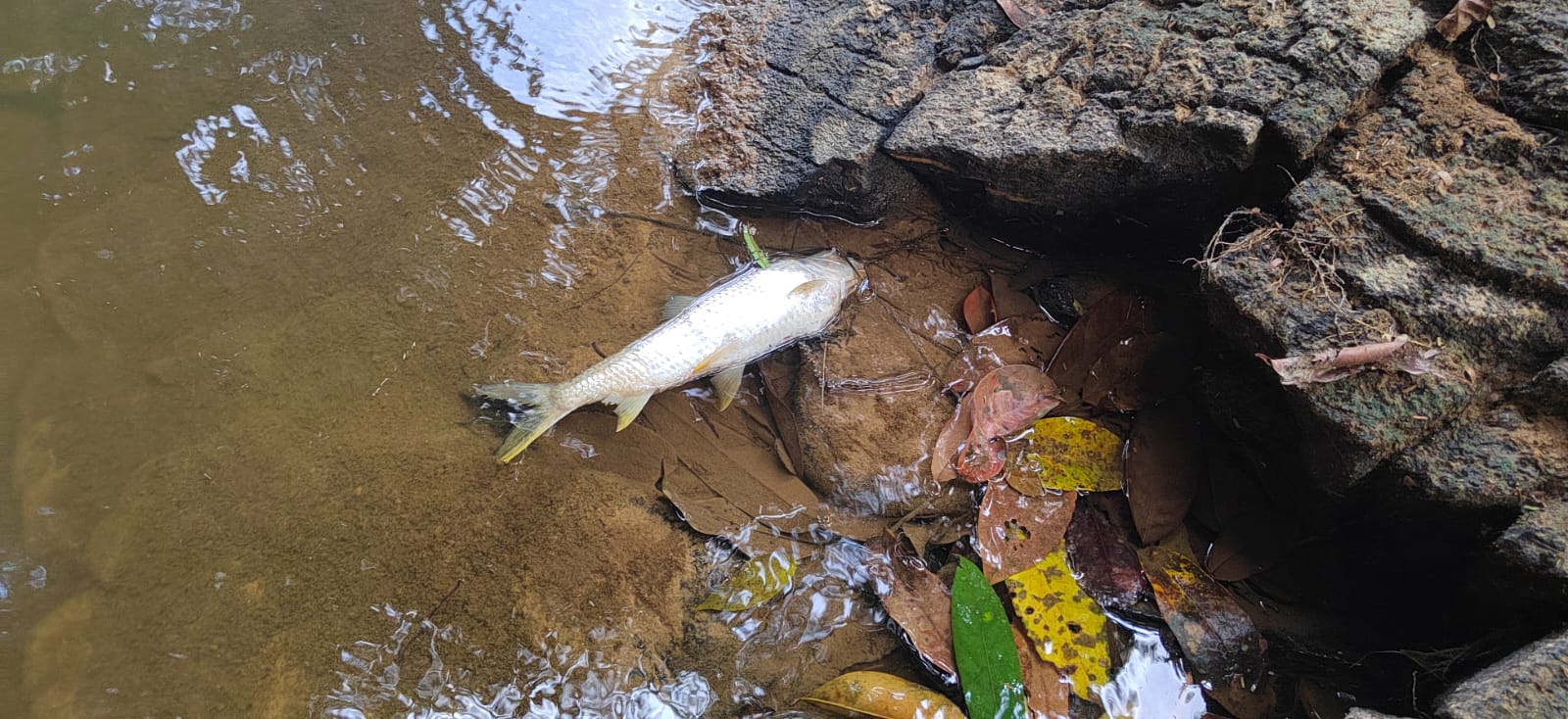
Eyewitnesses say the pollution has triggered a major fish die-off in the Mavor Creek and Mafa River, with aquatic life perishing due to alleged chemical waste, including cyanide, allegedly released by the mining company.
The Environmental Protection Agency (EPA) has confirmed fish mortality events following investigations and has advised residents to avoid the water.
“We need safe drinking water and food items,” said Mohammed Feakai, the Town Chief of Koima Weyaja, speaking to journalists on May 24 and appealing for government intervention and humanitarian aid. “We have suffered a lot for safe drinking water and even fish to eat since 2022.”
Mohammed said, “The chemical waste polluted our water. Bea Mountain used to give us food and items, but it is over 4 years now and we have not received food items,” but he said that they sometimes give us only 8 bags of rice, which is of no help to the community.
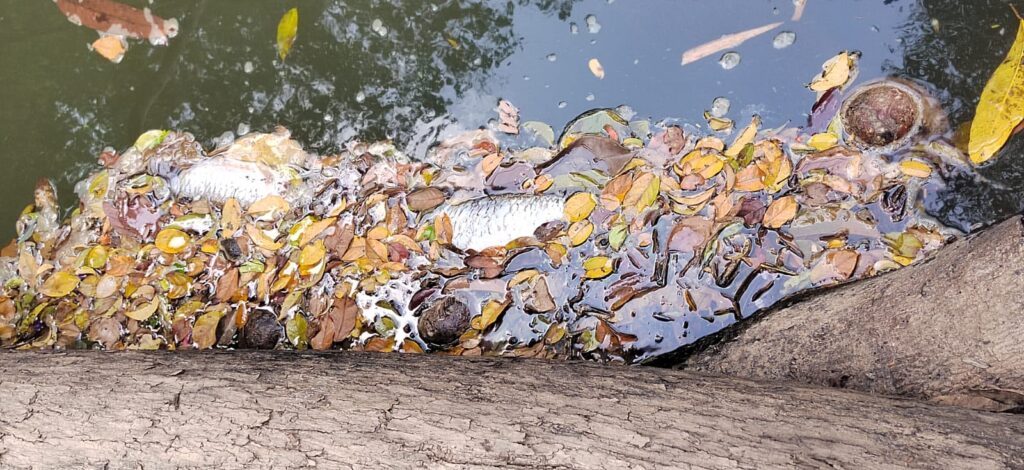
He also disclosed that the company built a hand pump 4 years ago in the bush, but he said, “it cannot serve the community and it cannot also give us fish either. We used to use our water for fishing, cooking, washing our clothes, and drinking, but because of the chemical pollution, we no longer use it, and the company is not giving us anything for survival.”
Town Chief Boima Passeway, reflecting on Jinkoder’s relocation and current conditions downstream of the Marvoe and Mafa rivers, questioned what will happen to other communities still living downstream: “Even though Jinkoder has been removed due to the same chemical pollution, there are still other communities living downstream of Marvoe and Mafa rivers. What will happen to them?”
The affected communities include Koima Weyaja, Haygbema, Nyadohum, Kobolia, Nagbena, and Wangako, among others.
Jenneh Kamara, head of a local gardeners’ group, recalled that in 2022, over 80 gardeners’ crops were destroyed by chemical waste, and Bea Mountain did not respond.
The communities are seeking immediate action from the government, Bea Mountain Mining Company, and humanitarian organizations to secure safe drinking water, food, and survival support.
They are also calling for compensation for safety and environmental damages.
Despite these calls, EPA laboratory results reportedly indicate that cyanide levels were within regulatory limits at sampling points and below concentrations known to cause fish mortality, underscoring a need for a thorough independent investigation.
The conflicting reports have intensified demands for greater transparency, ongoing monitoring, and urgent government and corporate accountability to protect the communities’ right to clean water and a healthy environment.
As the situation continues to unfold, local and international organizations are closely watching, expecting decisive action to address the crisis.

