


By: Henry B. Gboluma, Jr. | Gbarpolu Correspondent
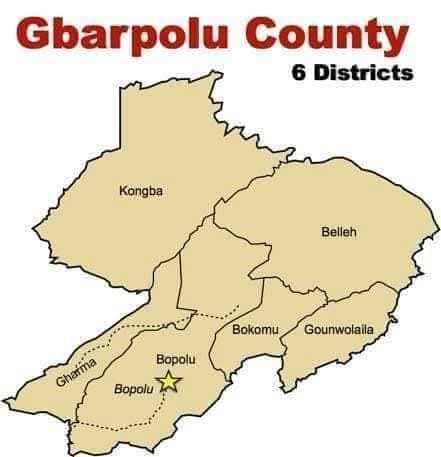
Bopolu City, Liberia |Feb. 2, 2026 | Youth leaders in Gbarpolu County are raising alarms over a shocking revelation that the Liberia Institute of Statistics and Geo-Information Services (LISGIS) transferred Guo Nwolailai Administrative District’s population of 17,986 to Grand Cape Mount County, reducing Gbarpolu’s administrative districts from 6 to 5 and population to 95,995.
In effect, the youths in totality are calling for the restoration of the said population of Guo Nwolailai District and completely opposed to this latest action by Liberia’s foremost statistics office.
The development, highlighted during an on-air appearance on a local radio station, is believed to have negative implications for Gbarpolu, according to speakers Joshua Mendscole and Willie Taylor.
The 2022 Liberia Housing and Population Final Report, published as an online PDF, shows on page 84 that Guo Nwolailai Administrative District was reallocated under Grand Cape Mount County, increasing Cape Mount’s population to 178,867.
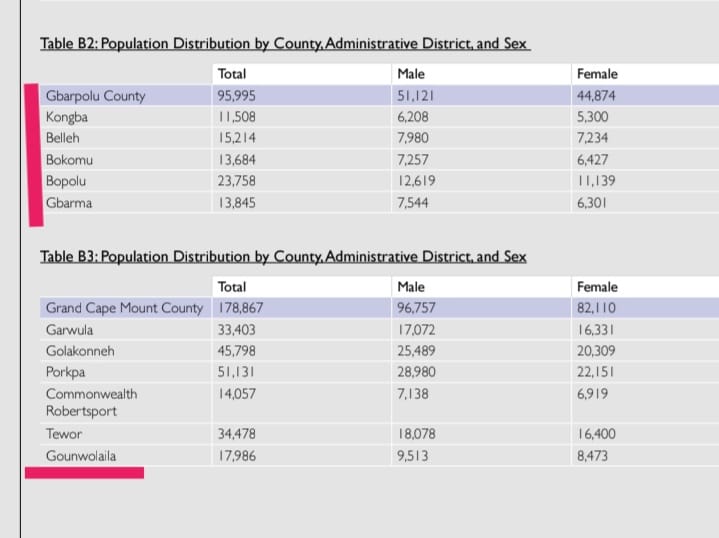
On the contrary, Gbarpolu’s administrative structure was reduced from six to five districts, with its population listed at 95,995 in the same report. Youth and Civil Society Advocates have asserted that the transfer artificially skews population-based planning and electoral calculations.
These revelations have stoked concerns across various sectors in Gbarpolu County.
Youth leaders Joshua Mendscole and Willie Taylor sounded the alarm on local radio, slamming LISGIS’ action as a “bad effect on Gbarpolu”. “Development and electoral district is determined through population in Liberia,” Taylor warned, vowing to hold lawmakers and LISGIS fully accountable for this grave error.
They believed that development and electoral districting in Liberia are population-driven, and urged continued engagement with lawmakers and LISGIS to address the issue. As soon as possible.
Legislators are currently reviewing the 2022 Final Census Report as they contemplate creating an additional 14 electoral districts. If adopted, Grand Cape Mount would gain one seat, with other counties slated for increases including Bong, Grand Bassa, Grand Gedeh, Lofa, Margibi, Montserrado, and Nimba.
While Mendscole clarified that he does not oppose other counties receiving additional seats, he insists that LISGIS restores Gbarpolu’s population counts to reflect the original administrative boundaries.
He and other youth and civil society actors have pledged to sustain advocacy for a correction from LISGIS and, if necessary, an official apology to Gbarpolu.
When contacted for comment, LISGIS County Director Rufus Kuku stated that the matter is under review and that he could not comment further until he obtains guidance from the LISGIS’s head office.
As the debate unfolds, residents of Gbarpolu County say they will continue pressing for transparency and accuracy in census data, stressing that equitable representation in development and electoral districts depends on correct population figures.

