


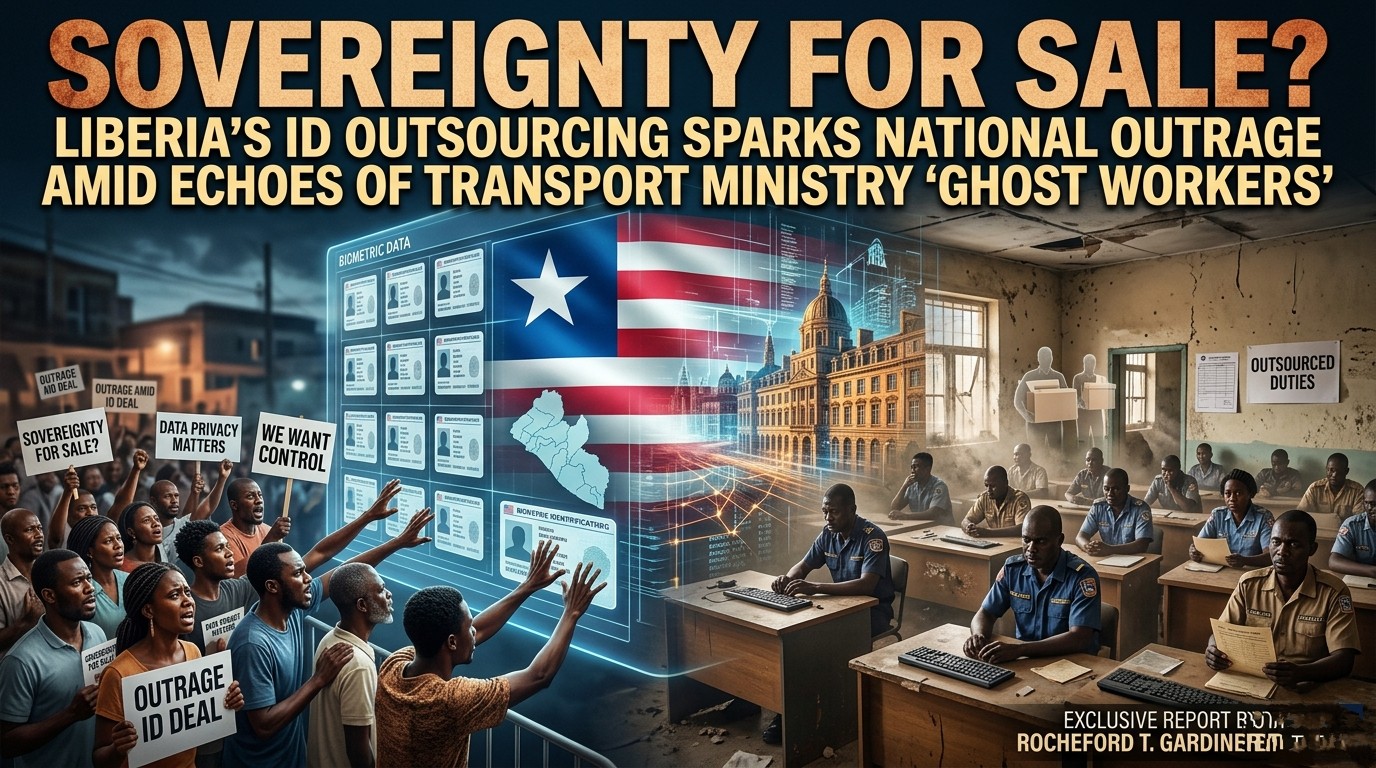
By: Rocheford T. Gardiner |Contributing Writer
Monrovia, Liberia |May 18, 2026|Liberians are expressing concern over a new agreement involving the country’s National Biometric Identification System (NBIS).
The government recently signed a $9.8 million deal with Austrian company OSD International to help improve the national ID system.
Many citizens believe the national ID card is very important because it serves as proof of citizenship and allows people to access banking and other public services.
Some residents fear that giving a foreign company control over biometric data could affect privacy and national confidence.
The government says the project is meant to improve the country’s struggling ID system.
Officials pointed to long delays, broken equipment, and system failures in 2025 that made it difficult for citizens to receive identification cards.
However, critics believe local institutions should have been strengthened instead of depending heavily on foreign companies.
They say national identity systems should remain under strong local control because they are tied to state responsibility and public trust.
Many people are comparing the current situation to the outsourcing agreement at the Ministry of Transport involving Lebanon Transport Management (LTM).
That agreement transferred the printing of driver’s licenses and vehicle documents to a private company.
According to reports, many workers at the Ministry of Transport later lost their daily responsibilities because the private company handled most of the technical work.
Some employees reportedly continued going to work each day without having active duties to perform.
Workers at the National Identification Registry are now worried the same situation could happen there.
The new system will reportedly bring in 500 biometric kits and establish 500 enrollment centers across Liberia under technical support from OSD International.
Some financial experts, however, believe the new biometric system could help improve government services and reduce fraud.
They say the system may help remove “ghost names” from government payrolls and improve tax collection through secure digital identification.
The system is also expected to reduce cash leakages by introducing traceable digital payments during ID registration processes.
Supporters believe this could strengthen transparency and improve public revenue collection.
Many Liberians say the country now faces an important moment in balancing modernization with national responsibility.
While citizens want better services and efficient systems, many also hope local workers and institutions will remain fully involved in managing Liberia’s national identity program.

