


By: Jenneh Kemokai | Grand Cape Mount Correspondent
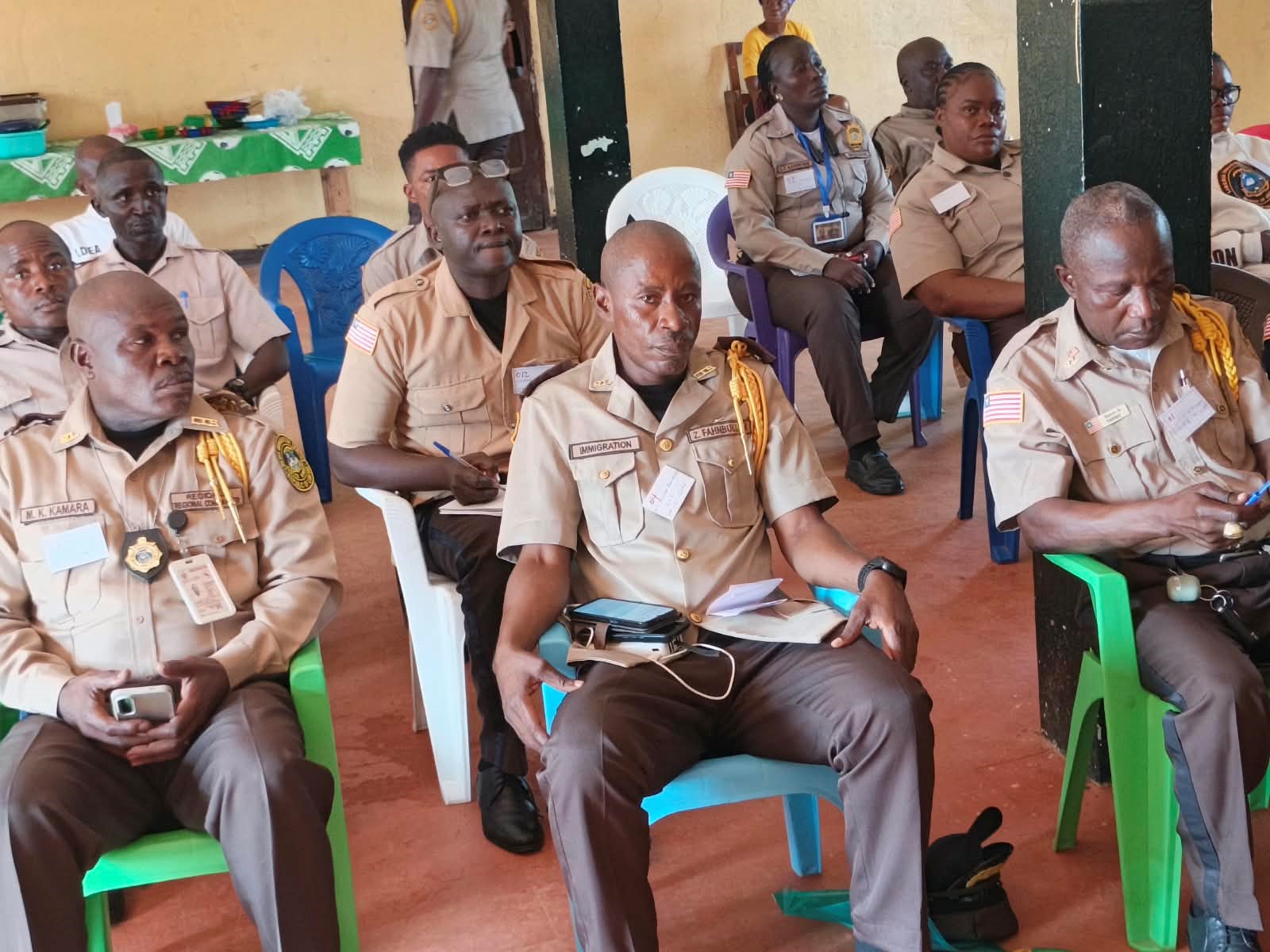
Tewor District, Grand Cape Mount County | September 28, 2026 |The International Organization for Migration (IOM) has begun a five-day border security training for security officers in Grand Cape Mount County as part of efforts to strengthen border management and security along Liberia’s frontier with Sierra Leone.
The training opened on September 21 in Tewor District and is scheduled to continue through September 25. A second phase of the training will be held in Bopolu City, Gbarpolu County, from September 28 to October 2.
The exercise brings together about 25 officers from the Liberia National Police (LNP), Liberia Immigration Service (LIS) and Liberia Drug Enforcement Agency (LDEA).
The participating officers are drawn from different border communities and operational areas along the Liberia-Sierra Leone border. The training is being conducted under the GOLA-REAP project, which stands for Resilience, Empowerment, Access and Peace-building.
The project is jointly implemented by IOM and the World Food Programme (WFP) with funding from the United Nations Peace-building Fund. The initiative targets communities in Tewor and Porkpa Districts in Grand Cape Mount County and Kongba District in Gbarpolu County.
The broader project seeks to strengthen social cohesion, improve border management, support local governance and promote climate-smart agriculture across the Gola Forest landscape.
According to the project framework, these interventions are intended to reduce conflict risks while strengthening the economic resilience of communities living around the forest and border areas.
The border security training forms part of efforts to improve the capacity of security personnel working in communities where movement across the border is an important part of daily life.
Facilitators for the workshop are drawn from the Liberia Immigration Service, Liberia Peace-building Office, Office of the United Nations High Commissioner for Human Rights and IOM.
The facilitators are expected to provide participants with practical knowledge relevant to border management, human rights and peace-building.
Speaking to the Rural Reporters News Network, Osborne Tate, Director of Training and Manpower Development at the Liberia Immigration Service, said the training should improve officers’ understanding of the Integrated Border Management system.
Tate encouraged participants to make full use of the training and apply the knowledge gained in their respective areas of assignment.
He also urged the officers to share the skills and information acquired with other colleagues after returning to their duty stations.
The cascading approach is expected to extend the benefits of the training beyond the 25 officers directly participating in the workshop. By sharing the knowledge with colleagues, the training could strengthen the capacity of security personnel working at other points along the border.
For communities in remote border areas, improved coordination among security institutions can help address challenges associated with cross-border movement and security.
Charles Cummings, Commander of the LDEA in Porkpa District, highlighted some of the operational difficulties confronting security personnel along the border.
He identified limited mobility as one of the major challenges affecting the ability of officers to carry out their duties effectively.
Cummings also pointed to poor road infrastructure, lack of electricity and inadequate communication networks in several border communities.
The challenges can make it difficult for security officers to move between communities, communicate quickly and respond to incidents in remote areas. Improving border security therefore requires not only trained personnel but also adequate infrastructure, transportation and communication systems.
Participants are expected to use the training to strengthen coordination and improve their response to security concerns within their areas of operation.
Emmanuel Tarr, Trafficking in Persons Coordinator at the Liberia Immigration Service, expressed optimism about the potential benefits of the exercise.
Tarr said the workshop is expected to provide participants with practical knowledge that can be applied to their daily responsibilities.
Ansumana Kromah, LNP Commander assigned in Bo-Waterside, also expressed confidence that the training would achieve its intended objectives.
Bo-Waterside is an important border crossing between Liberia and Sierra Leone, making effective coordination among security institutions essential to managing movement and addressing security concerns.
The participation of officers from the LNP, LIS and LDEA also provides an opportunity for the three institutions to strengthen their understanding of each other’s responsibilities.
The involvement of the Liberia Peace-building Office adds a peace-building dimension to the security training, particularly in communities where border-related issues can intersect with local social and economic concerns. The project’s focus extends beyond security to include local governance, social cohesion and economic resilience.
Through the GOLA-REAP project, IOM and WFP are working with communities in the Gola Forest landscape on interventions intended to address factors that can contribute to conflict. Climate-smart agriculture is also included in the project as a means of strengthening livelihoods and improving resilience among communities.
The combination of border management, peace-building and livelihood support is intended to address both immediate security concerns and some of the underlying challenges facing border communities.
The training in Tewor is the first phase of the current exercise. The second phase in Bopolu will extend the training to security officers operating in Gbarpolu County.
The two phases will provide participating officers with an opportunity to strengthen their professional skills while sharing experiences from different border and operational communities.
The initiative also demonstrates the role of partnerships among international organizations, government security institutions and local peace-building structures in addressing border security challenges.
As the training continues, participants are expected to focus on practical approaches that can improve border management and strengthen cooperation among security institutions. The knowledge gained is also expected to be shared with other officers through the cascading approach.
The training comes at a time when communities along Liberia’s borders continue to depend on cross-border movement for trade, family connections and other social activities. Strengthening security capacity while maintaining effective and rights-based border management is therefore important to both security personnel and communities.
The GOLA-REAP project is expected to continue supporting activities aimed at strengthening social cohesion and resilience in the targeted districts.
For the participating security officers, the training provides an opportunity to improve their professional capacity and develop stronger coordination mechanisms for work along Liberia’s western border.

