


By: Geeplay Ezekiel Geeplay | Contributing Writer
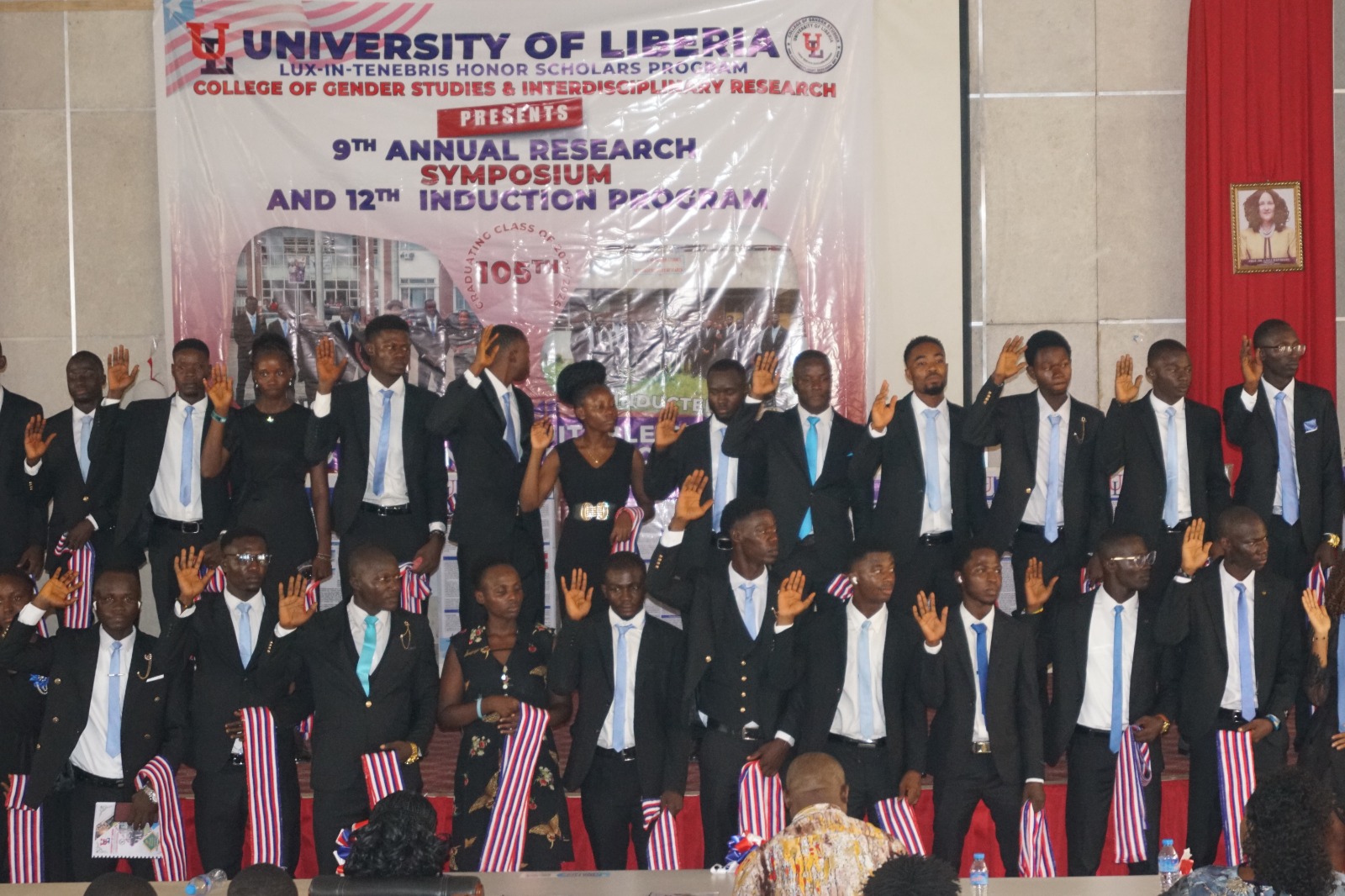
Monrovia, Liberia |February 21, 2026 | – The University of Liberia (UL) celebrated academic excellence on Wednesday, inducting 48 standout freshmen into the College of Gender Studies and Interdisciplinary Research’s Honors Scholars Program. The ceremony recognized students who maintained elite academic standings throughout their first year of study.
The induction was held at the Fendell Campus, serving as a cornerstone of the college’s 9th Annual Research Symposium. This year’s event marked the 12th induction in the program’s history and officially launched the festivities for the University’s 105th Commencement Convocation.
The 48 new inductees, comprising 8 women and 40 men, were selected from various colleges across the university based on their high academic performances. The Honors Scholars Program aims to empower students with sustainable research knowledge and skills needed to solve critical national issues.
“Admitting students to the program is a rigorous process,” said Madam Lorpu Garmai Blackie, dean of the College of Gender Studies and Interdisciplinary Research. “Students must maintain a cumulative grade point average of 3.33.”
During the symposium, five graduating honors scholars presented their research papers, addressing the U.N. Sustainable Development Goals. Topics included “Assessment of Groundwater Quality in Chicken Soup Factory Community,” “Assessing the Impact of Gender on Women’s Political Participation and Representation in Liberia,” and “Pageantry Exploitation and the Financial Implications for Girls Participating in Miss Earth Liberia.”
Delivering a special statement, Dr. Layli Maparyan, President of the University of Liberia, emphasized the importance of research in national development. “Research is not merely an academic exercise, but a public good – a powerful tool for national development, policy reform, and social transformation.”
Dr. Maparyan encouraged the inductees to pursue research that is ethical, bold, and impactful, addressing the needs of the nation and beyond. “When research is equitable, inclusive in design, participatory in method, and responsive in outcome, it becomes a force that uplifts communities and leaves no one behind.”
The ceremony concluded with Dr. Edna Johnny, president of the University of Liberia Faculty Association, delivering a keynote address, highlighting the importance of community partnership in research for sustainable development.

