

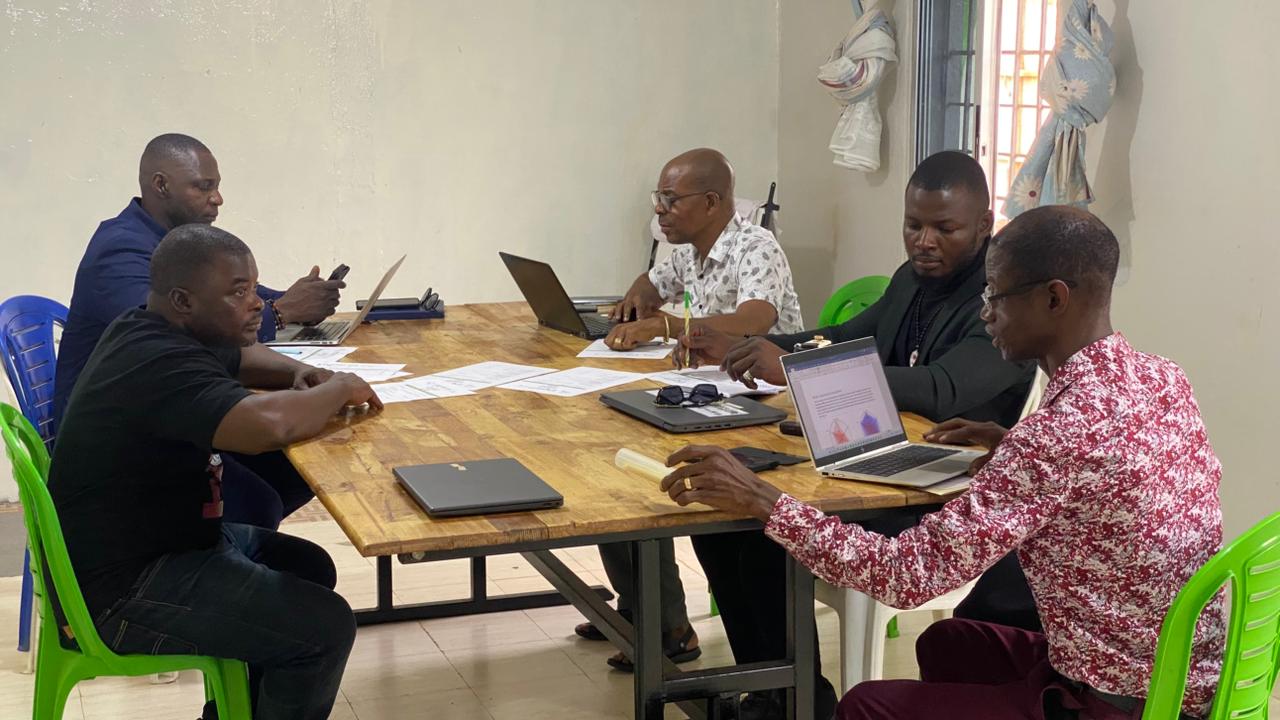
Monrovia, Liberia – The Board of the Liberia Forest Media Watch (LFMW) has endorsed a series of strategic reforms and sustainability measures following a comprehensive meeting that focused on project updates, gender inclusion, capacity building, institutional strengthening, and editorial direction.
The meeting, held on Tuesday, January 13, 2025, reviewed progress under the EU-funded FLEGT VPA project, assessed organizational performance, and charted a forward-looking agenda aimed at safeguarding LFMW’s niche in forest governance, accountability, and environmental journalism.
Non-Cost Extension and Sustainability Plans
Management informed the Board that the current EU-FLEGT VPA project is officially scheduled to end in April 2026. However, there were ongoing discussions for a non-cost extension that would focus on core programs like Forest Hour Radio Talk-show and investigative journalism up to June 2027
The Board was also informed about ongoing discussions for a possible partnership with a local civil society organization, Sustainable Development Institute (SDI) under its new Forest Governance, Market and Climate Program. The partnership will focus on radio broadcasting and investigative journalism on cocoa farming activities in the Southeast of Liberia. Management noted the partnership is a direct result of LFMW’s sustainability plan and the impact of its co-programs, particularly Forest Hour and Investigative Journalism.
Gender Inclusion and Teamwork
The Board reaffirmed its commitment to gender mainstreaming, noting progress in training and reporting under the theme: “Strengthening opportunities for female journalists to produce print and radio news stories. “While participation remains a challenge, the quality of women’s reporting has improved significantly with three of the female reporters performing well”, Board Chair & Mentor, Danicius Kaihenneh Sengbeh said. The Board encouraged management to increase female journalists’ involvement across all LFMW’s programs, including “intentional” reporting on issues affecting women in forestry, conservation and climate change and agriculture by both male and female reporters.
Capacity Building: Reporting, Cybersecurity and AI
The meeting also underscored the importance of teamwork as a cornerstone of institutional success. Management acknowledged that while progress is being made, more effort is required, including holding at least two regular staff meetings per month to enhance collaboration, transparency, and accountability.
To strengthen reporting quality and institutional visibility, the Board urged management to revisit the outcome of the Buchanan retreat and the report of the International Technical Advisor on capacity gaps.
Management agreed to introduce training in technical report writing, cybersecurity, and the use of Artificial Intelligence (AI) as suggested by the Board. Training will initially target staff and senior management before being extended to journalists based on performance levels.
Monitoring, Evaluation, Audit and Internal Reporting
The Board recognized the importance of strengthening internal control and collaboration in which LFMW’s management disclosed that plans to conduct an internal review of administrative and financial activities were being considered pending funding availability.
The meeting identified a clear need for training in Monitoring and Evaluation (M&E) for staff. Management reported ongoing support to improve staff capacity in identifying and documenting project outcomes.
Editorial policy
The Board discussed the proposal to include political stories on LFMW’s Rural Reporters News Network (RRNN) website as a way to attract national political stakeholders to the platform and increase engagement with environmental content. However, serious concerns were raised about the risk of political bias, loss of credibility, dilution of LFMW’s niche, and potential misuse of the platform for political promotion. The Board agreed for a clear editorial policy before any inclusion of political development reporting.
RRNN was organized to enhance collaboration and coordination among rural journalists and to promote other aspects of the network’s members work, who were only reporting forest and natural resource stories prior to the establishment of rrnnliberia.com.
The Board noted that LFMW’s work is already political in nature through advocacy, environmental governance, and accountability reporting, and should therefore remain focused on investigative, policy-driven, and governance-related stories.
Commitment to Institutional Strengthening
In closing, the Board thanked management for the updates and progress made, while urging greater innovation, institutional strengthening, and consolidation of retreat outcomes. The Board emphasized the need to protect LFMW’s niche, strengthen internal systems, build staff capacity in M&E, AI, cybersecurity, and reporting, and develop a clear editorial policy before expanding into political development reporting.
“Our strength lies in what makes us unique. Diluting that space could cost us the trust of donors, partners, and the public,” the Board concluded. The Management promised to maintain and protect the original idea of LFMW as well as ensure professional reporting in line with journalistic principles.


1 Comment
phtaya06 https://www.phtaya06y.com