


By: Ben TC Brooks | River Gee Correspondent
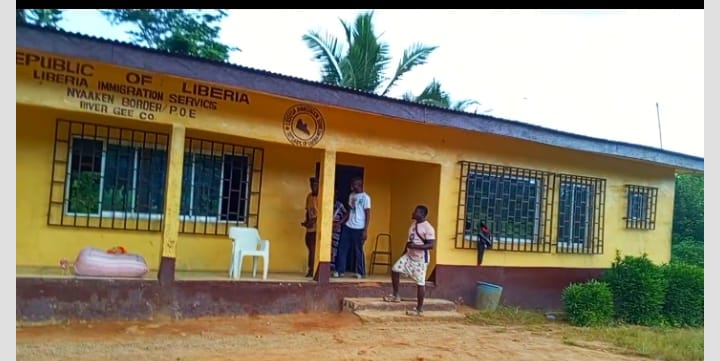
River Gee County | April 24, 2026 | District authorities in River Gee County are voicing growing frustration over what they describe as the county’s inability to benefit from revenue generated at the Nyaaken border crossing, a key transit point between Liberia and Côte d’Ivoire.
An investigation by our reporter revealed that although the Nyaaken crossing lies within River Gee County, but revenue collected there is not remitted to the County Revenue account, instead, the collection process remains administratively tied to neighboring Maryland County.
According to local officials, all security personnel stationed at the Liberian-Ivorian border fall under River Gee’s jurisdiction, with the exception of customs officers operating at the same post been deployed and supervised from Maryland County under the Liberia Revenue Authority customs department.
Nyaaken Township Commissioner Boddy Freeman described the arrangement as problematic and detrimental to local development.
“The border is in River Gee, yet customs officers are assigned from Maryland and report to Maryland County. This raises serious concerns about how our county and community can benefit from resources generated within its own territory,” Freeman said.
He noted that although Nyaaken was historically part of Maryland County but subsequent boundary adjustments has placed community firmly within River Gee.
Despite its being in River Gee, administrative control over customs operations has not been updated to reflect the change.
However, under the standard procedures, customs officers are responsible for assessing and collecting duties on imports and exports, facilitating trade, and enforcing inspections.
These revenues include duties based on cost, insurance, and freight – CIF, specific duties, a 10% Goods and Services Tax – GST, and a 1.5% ECOWAS Trade Levy – ETL.
However, River Gee officials say the county sees little to no benefit from these collections.
“We daily seeing revenue being generated, but we do not see its impact in our communities,” Freeman added, citing poor road conditions and limited infrastructure development.
For his part, River Gee Webbo district Tax Collector, Eric Moore confirmed that repeated attempts to secure access to the revenue for River Gee have yielded no results.
“Several efforts have been made to ensure River Gee benefits from the Nyaaken border revenue, but none have been successful,” Moore said.
Local authorities say the matter has been formally reported to the leadership of the Liberia Revenue Authority, but no corrective measures have been taken so far.
Officials are now calling for an administrative realignment that would place customs operations at Nyaaken under River Gee County’s authority, ensuring that revenue generated locally contributes directly to development initiatives.
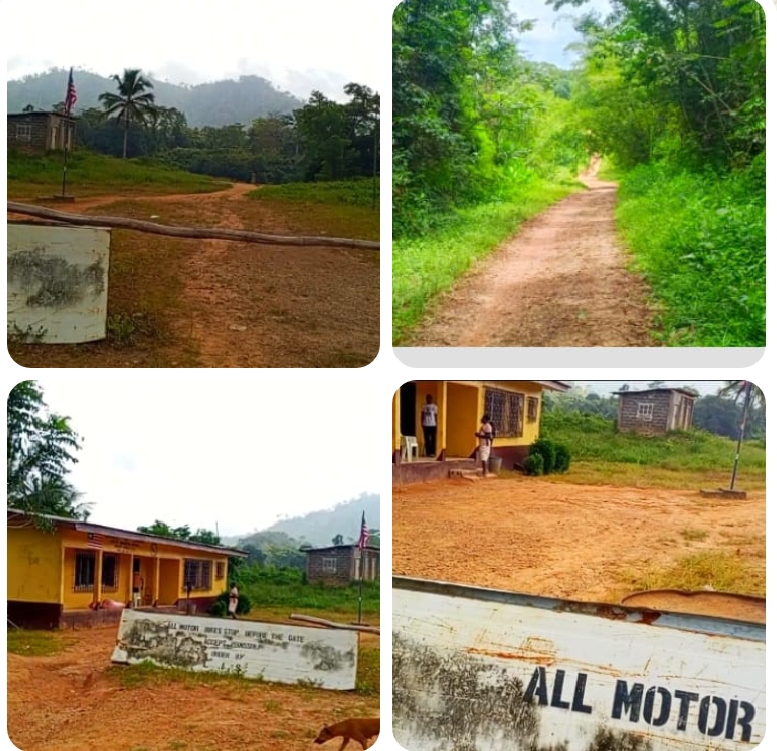
Situated along the Cavalla River, Nyaaken is a historic town that has long played a central role in Liberia’s trade and diplomatic history.
It now lies approximately 65 kilometers from Fish-Town, the capital of River Gee.
Its strategic location has made it a vital crossing point between Liberia and Côte d’Ivoire, supporting cross-border trade and cultural exchange for generations.
However, in 1927, a prominent stone monument was erected in Nyaaken honoring President Charles D. B. King and Vice President Allen N. Yancy. The marker formally established Liberia’s territorial boundary during a critical period of regional demarcation.
Positioned along the Cavalla River opposite Ivorian territory, the monument remains a powerful symbol of national sovereignty and diplomatic heritage.
Long before the border monument was installed, Nyaaken thrived as a commercial hub linked to 19th-century trade networks along the Cavalla River, some of which intersected with the transatlantic slave trade.
The town also carries a more difficult legacy. Oral accounts suggest that during the early 20th century, residents were subjected to forced labor under local administrative authorities.
Communities were reportedly compelled to construct roads and work on farms without pay, even as they bore the burden of hut taxes, raising serious concerns about historical human rights abuses.
Today, Nyaaken stands at the intersection of Liberia’s past and future.
Despite its historical significance, residents say the town faces growing development challenges that threaten both its legacy and its potential.
Community members are calling for a dual approach preserving Nyaaken’s rich history while ensuring that modern economic opportunities, including border-generated revenue, contribute to sustainable and equitable development within the area.

