


By: Peter Kollie | Lofa Correspondent &Actg. Director of Programs/AYR
Artificial intelligence is rapidly transforming the global media landscape, shifting the focus from mere access to technology to how effectively it is used. In response to this evolving reality, HWPL has conducted a practical training program aimed at strengthening the capacity of African journalists.
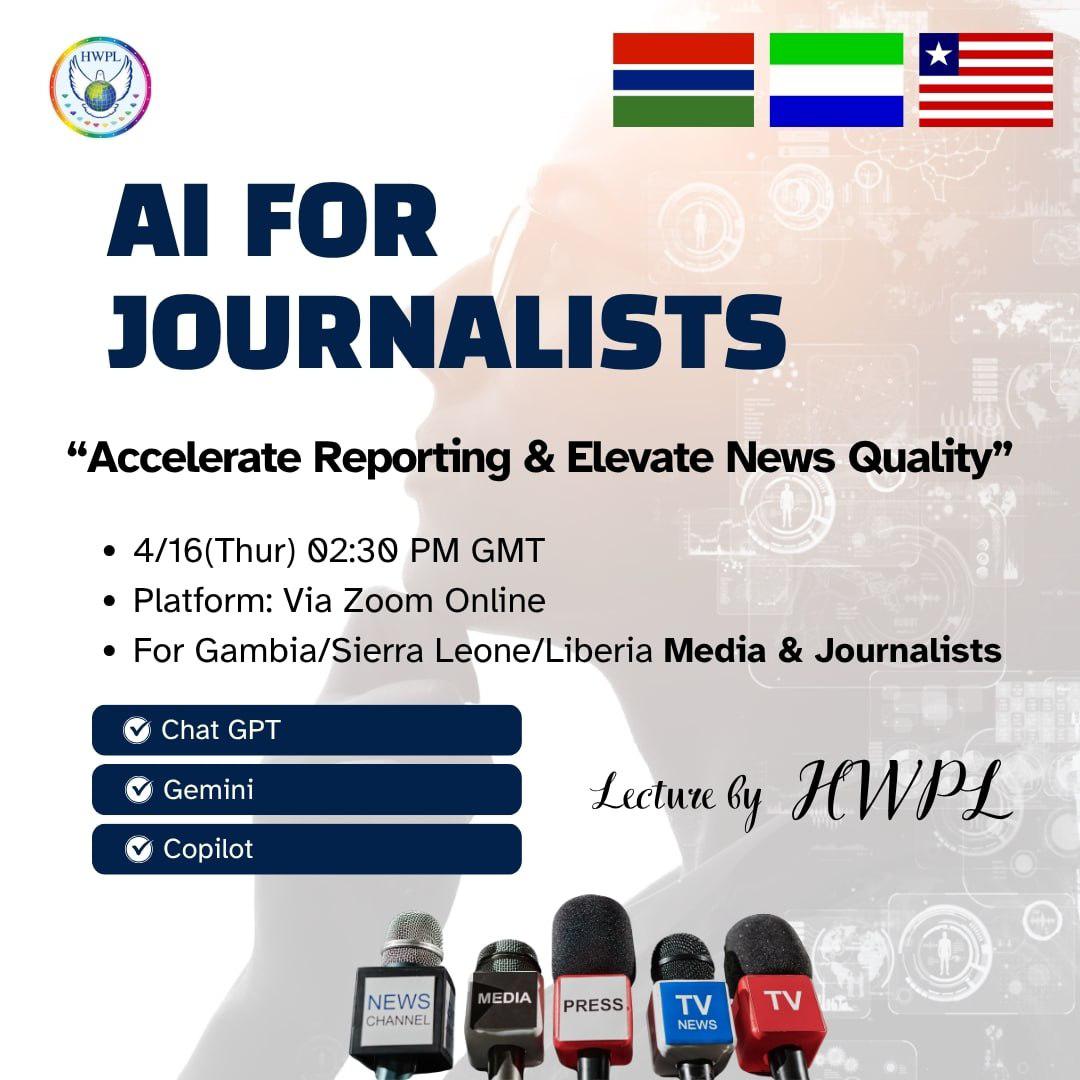
The online training, held on April 16 via Zoom, brought together approximately 50 journalists and media practitioners from Sierra Leone, Liberia, and Gambia. Organized under HWPL’s media program, the session focused on hands-on applications of artificial intelligence tools in reporting and news production.
Participants were introduced to several leading AI platforms, including ChatGPT, Gemini, Claude, and Grok. Each tool was presented according to its strengths—ranging from research and article writing to document analysis and real-time news verification.
Facilitators emphasized a “toolset approach,” encouraging journalists to combine multiple AI tools based on specific editorial needs rather than relying on a single platform. According to organizers, such strategic utilization is becoming a key factor in determining competitiveness in modern journalism.
“In the AI era, competitiveness is no longer defined by access to technology, but by the ability to use it effectively,” the training highlighted.
Beyond technical skills, the program stressed the importance of responsible journalism. Participants were reminded that while AI can assist in analyzing and organizing large volumes of information, the responsibility for accuracy, verification, and editorial judgment remains with human journalists.
The training also addressed ethical concerns, particularly the risk of misinformation. Journalists were urged to adopt strict fact-checking practices, rely on multiple sources, and clearly label AI-generated content, especially images, to maintain public trust.
The initiative forms part of broader efforts to support digital transformation and peace journalism across Africa. Organizers believe such capacity-building programs can help bridge information gaps, enhance professional standards, and foster stronger collaboration among media practitioners in the region.
Following the session, HWPL announced plans to establish a network among participating journalists to share AI use cases and expand future initiatives, including advanced training and collaborative reporting projects.
Speaking during the training, facilitator Joseph Joe underscored the importance of ethical AI adoption.
“In the AI era, it is not how quickly you adopt the technology, but how responsibly you use it that matters,” he said. “This training is an opportunity for journalists to adapt to changing environments while maintaining credibility and public trust.”
As artificial intelligence continues to evolve, its impact on journalism is becoming increasingly profound—not only transforming newsroom tools, but redefining the role and responsibilities of journalists worldwide.

