


By: Emmanuel Koffa | Grand Kru Correspondent
Poe, Dorboh District, Grand Kru County | April 28, 2026 |A privately driven road construction initiative in Poe, Dorboh District, is emerging as a case study in grassroots development, demonstrating how local action can accelerate progress in underserved communities.
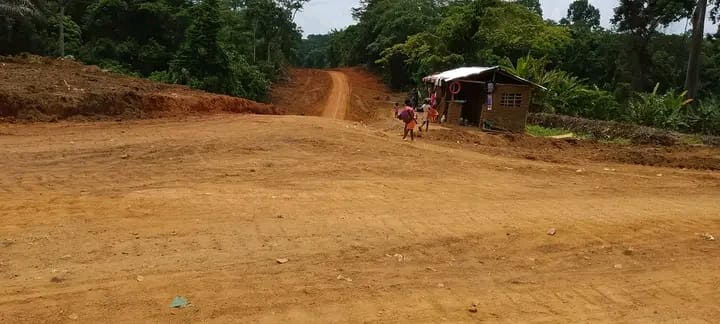
The project—led by Hilary Wleh Gray through Dorboh Incorporated—has opened a 3-kilometer road linking Poe, Ducor City, and Buoh Iron Bridge, a corridor that had remained inaccessible to vehicles for decades.
Closing the Infrastructure Gap
For years, communities in this gold-rich region have faced severe infrastructure deficits, with limited road access constraining mobility, trade, and service delivery. Development experts often point to such gaps as key barriers to rural transformation.
The newly cleared road directly addresses one of the most critical needs: connectivity. By linking isolated settlements to larger routes, the project lays the foundation for broader socio-economic growth.
Catalyst for Multi-Sector Development
Improved road access is widely recognized as a driver of development across multiple sectors. In Poe, the impact is expected to extend beyond transportation:
Agriculture: Farmers can more easily transport produce to markets, reducing post-harvest losses.
Health: Patients and medical supplies can move more quickly between communities and clinics.
Education: Students and teachers face fewer barriers in reaching schools.
Commerce: Local businesses gain access to wider markets and supply chains.
Residents say these changes could gradually shift the community from subsistence living toward more sustainable economic activity.
Community-Led Development in Action
Unlike traditional infrastructure projects funded through national budgets or donor programs, the Poe road initiative is entirely community-driven. This model reflects a growing recognition that local actors can play a critical role in advancing development, particularly in hard-to-reach regions.
Observers note that such initiatives often move faster due to fewer bureaucratic delays, though they also rely heavily on individual commitment and limited resources.
“This is development from within,” a local leader remarked. “It shows what can happen when communities take ownership.”
Sustainability and Next Steps
While the initial phase—clearing and opening the road—has been completed, the long-term success of the project will depend on continued investment. The next phase will involve grading and improving the road surface to withstand seasonal weather conditions.
Experts emphasize that sustained development will also require complementary investments in water, healthcare, and education infrastructure.
Implications for National Development Strategy
The Poe initiative is sparking broader reflection on development approaches in Liberia. It raises important questions about how government, private citizens, and communities can collaborate more effectively to address infrastructure gaps.
While grassroots efforts like this cannot fully replace large-scale public investment, they may serve as important catalysts—demonstrating viable solutions, mobilizing local participation, and accelerating progress where it is most urgently needed.
For the people of Poe, however, the significance is immediate and tangible: a road that not only connects communities, but also opens the door to long-awaited development.

