


By: Figo Mansaray | Contributing Writer
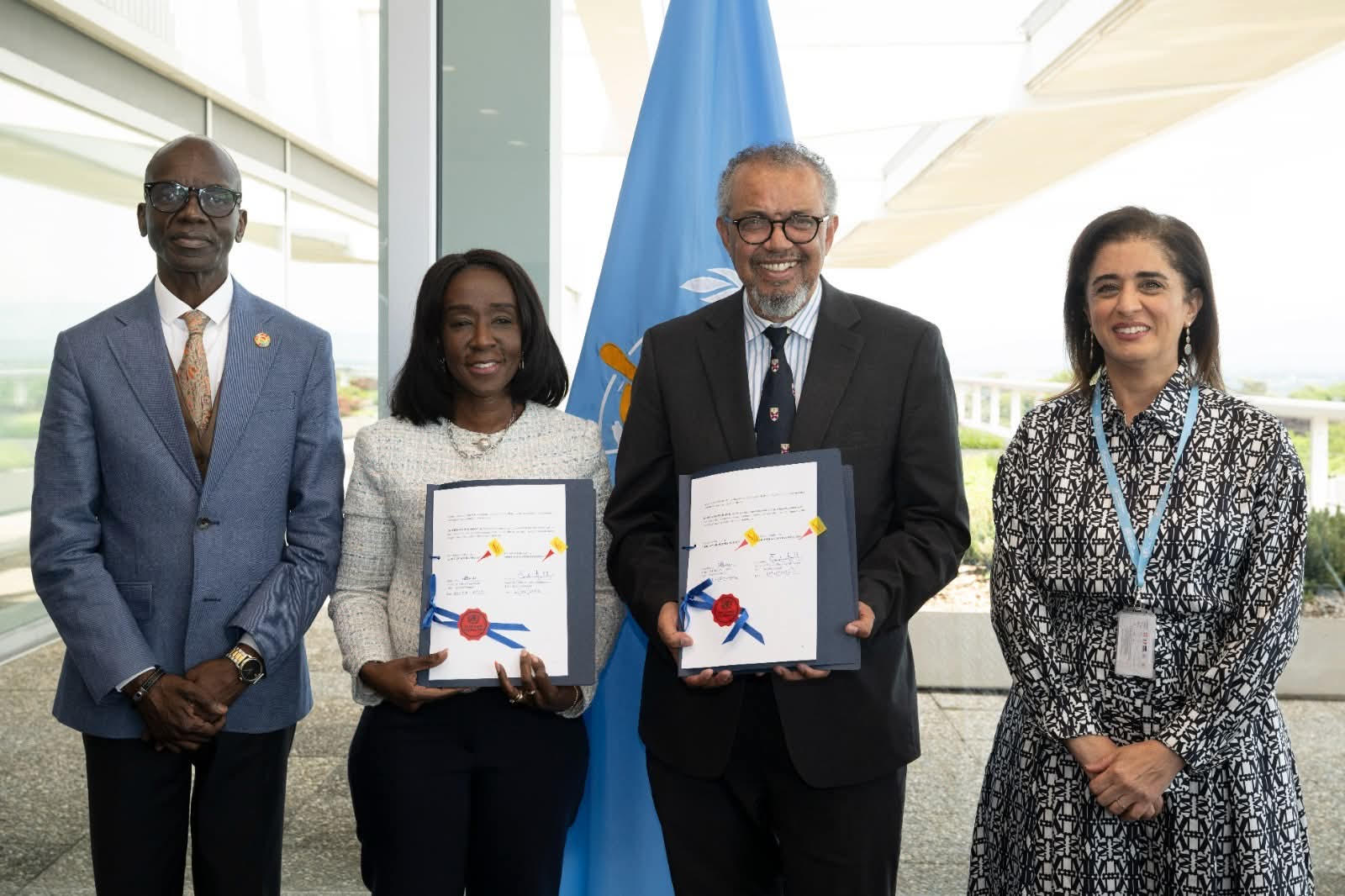
Geneva,Switzerland|May 23, 2026|The World Health Organization and the African Medicines Agency have signed a new Framework Agreement for Collaboration aimed at improving access to safe and quality health products across Africa.
Health experts say the agreement is an important step toward strengthening medical systems and protecting public health on the continent.
The agreement was signed during the Seventy-ninth World Health Assembly at a high-level ministerial side event.
The partnership will focus on improving cooperation between African countries in the regulation of medicines, vaccines, and other health products.
Health officials say many African countries continue to face challenges such as weak regulatory systems, limited local production of medicines, poor market monitoring, and the spread of fake or unsafe medical products.
These problems often delay access to important treatments and healthcare supplies.
The World Health Organization said the partnership will help create stronger and more united regulatory systems across Africa.
The organization believes this will improve health security and support better healthcare services for millions of people.
Dr. Yukiko Nakatani, WHO Assistant Director-General for Health Systems, Access and Data, said, “Strong regulatory systems are a pillar of resilient health systems and fundamental to health sovereignty, health security and equitable access to safe and quality-assured health products.”
The African Medicines Agency was established as a specialized agency of the African Union to strengthen the regulation of medicines and improve access to quality health products throughout Africa.
Dr. Delese Mimi Darko, Director-General of AMA, said, “Strong regulation is ultimately about protecting lives and building public trust.”
She added that every African should have confidence that medicines and vaccines meet the highest standards of safety and quality.
Under the new agreement, WHO and AMA will work together to improve safety monitoring, strengthen the health workforce, support local production of medicines, and prepare for future public health emergencies.
The partnership will also help speed up the approval process for medical products across the continent.
Health experts believe a more harmonized regulatory system could reduce delays, lower costs, and encourage investment in Africa’s healthcare sector.
Officials say this could benefit both patients and manufacturers by making health products more available and affordable.
Dr. Mohamed Yakub Janabi, WHO Regional Director for Africa, said, “The success of the African Medicines Agency will not be measured by the establishment of an institution alone, but by its impact: safer medicines, faster access and stronger health security for all Africans.”
Leaders at the event also called on African countries to continue supporting regulatory reforms and invest in stronger health systems for the future.

